


25 AugHazardous Waste Management for Michigan Businesses: A Complete Compliance Guide
Managing hazardous waste is one of the most critical responsibilities for industrial facilities in Michigan. Whether your operation generates small quantities of solvents and chemicals or large volumes of process waste, understanding the regulations, classifications, and proper handling procedures is essential for protecting your workers, your community, and your bottom line.
Non-compliance with hazardous waste regulations can result in fines exceeding $70,000 per day per violation under RCRA (Resource Conservation and Recovery Act), along with potential criminal penalties, cleanup liability, and lasting damage to your company's reputation.
This guide walks Michigan business owners and facility managers through the fundamentals of hazardous waste management, including how to classify your waste, understand your generator status, and maintain compliance with both federal EPA and Michigan EGLE requirements.
What Qualifies as Hazardous Waste in Michigan?
Not all industrial waste is hazardous, but making the wrong assumption can be costly. Under federal and Michigan regulations, a solid waste is considered hazardous if it meets any of the following criteria:
Listed wastes: The EPA maintains four lists (F-list, K-list, P-list, and U-list) of specific waste streams and chemical products that are automatically classified as hazardous regardless of their characteristics.
Characteristic wastes: Even if a waste is not on a specific list, it is hazardous if it exhibits any of these four characteristics:
- Ignitability (D001): Flash point below 140 degrees Fahrenheit, or capable of causing fire through friction, absorption of moisture, or spontaneous chemical changes
- Corrosivity (D002): pH equal to or below 2.0, or equal to or above 12.5
- Reactivity (D003): Unstable, reacts violently with water, or capable of generating toxic gases
- Toxicity (D004-D043): Contains concentrations of specific contaminants above regulatory thresholds as determined by the TCLP (Toxicity Characteristic Leaching Procedure) test
Michigan also recognizes universal wastes, which include batteries, pesticides, mercury-containing equipment, and certain lamps. These are managed under streamlined regulations but still require proper handling and disposal.
Understanding Your Generator Status
Your hazardous waste generator status determines which regulations apply to your facility. The EPA classifies generators into three categories based on the amount of hazardous waste generated per calendar month:
Very Small Quantity Generators (VSQGs):
- Generate 220 pounds (100 kg) or less of hazardous waste per month
- Generate 2.2 pounds (1 kg) or less of acute hazardous waste per month
- Must still identify all hazardous waste and ensure proper disposal
- No time limit on waste accumulation, but must not exceed 2,200 pounds on-site
Small Quantity Generators (SQGs):
- Generate between 220 and 2,200 pounds (100-1,000 kg) per month
- Must obtain an EPA ID number
- Can accumulate waste on-site for up to 270 days (or 180 days without treatment/storage permit)
- Must maintain basic training and emergency response plans
Large Quantity Generators (LQGs):
- Generate more than 2,200 pounds (1,000 kg) per month
- Must obtain an EPA ID number and submit biennial reports
- Can accumulate waste for up to 90 days without a permit
- Must maintain comprehensive personnel training, contingency plans, and emergency procedures
Many Michigan manufacturing facilities fall into the SQG or LQG categories, particularly those in the automotive, chemical, and metal finishing industries.
Proper Waste Disposal Methods for Industrial Facilities
Once waste is properly classified, selecting the right disposal method is the next critical step. The disposal method must match the waste type and comply with all applicable regulations.
Treatment, Storage, and Disposal Facilities (TSDFs)
Licensed TSDFs are permitted to treat, store, and dispose of hazardous waste. Treatment methods used at these facilities include:
- Incineration: High-temperature destruction of organic hazardous waste
- Chemical treatment: Neutralization, oxidation, or reduction to render waste non-hazardous
- Stabilization/solidification: Binding contaminants in a solid matrix to prevent leaching
- Fuel blending: Processing waste solvents and oils into alternative fuels
Liquid Waste Disposal
Liquid waste disposal requires special attention because liquids cannot be placed in landfills. Common liquid waste disposal methods include:
- Wastewater treatment and discharge under NPDES permits
- Deep well injection at permitted facilities
- Evaporation and concentration
- Fuel recovery and recycling
Michigan industrial facilities generate significant volumes of liquid waste from processes like parts washing, cooling systems, metal finishing, and chemical manufacturing. Proper characterization and disposal of these waste streams is essential for EGLE compliance.
Drum Disposal and Container Management
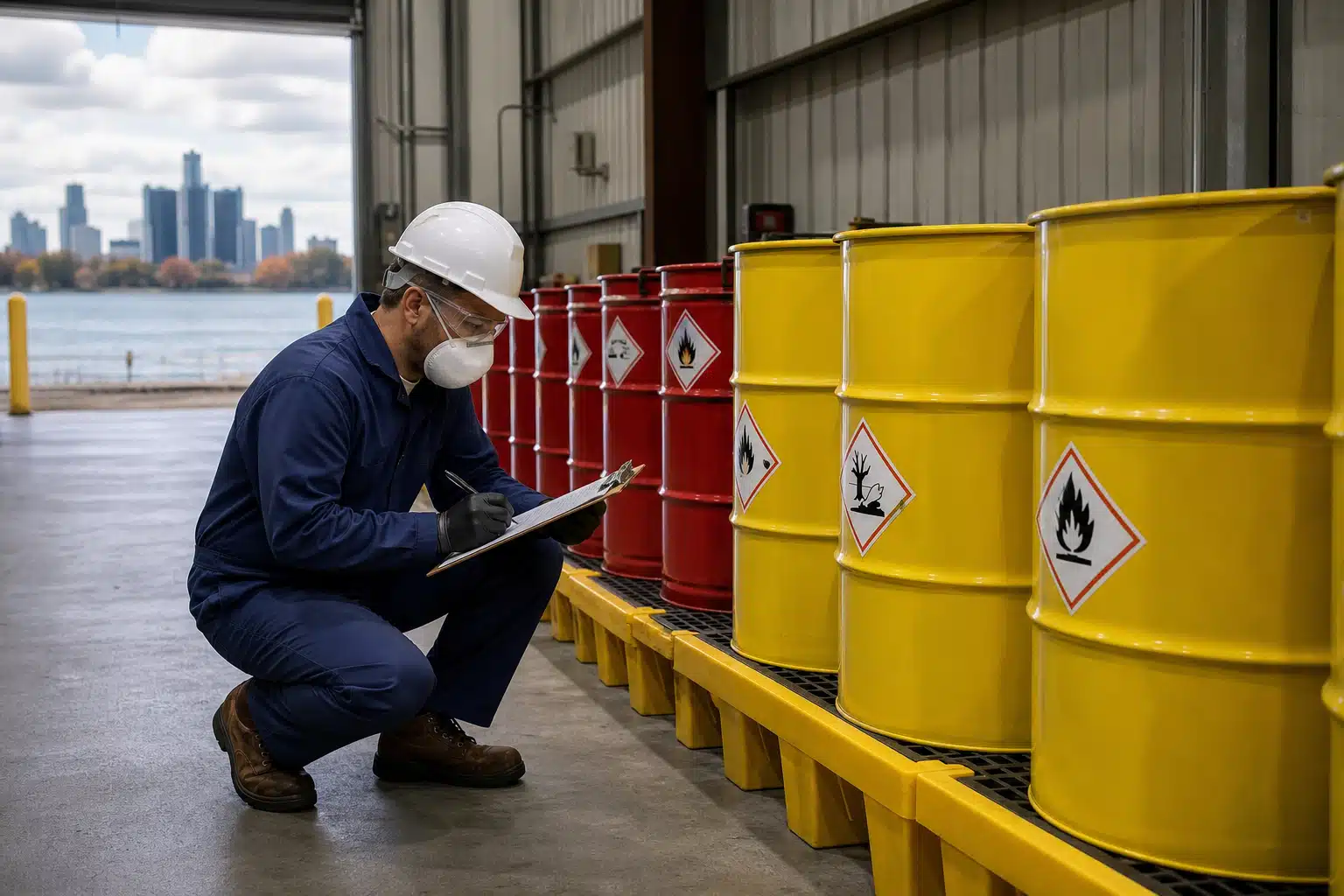
Drums and containers that held hazardous materials require specific handling under the drum disposal regulations. Key requirements include:
- Containers must be in good condition and compatible with their contents
- All containers must be kept closed except when adding or removing waste
- Drums must be properly labeled with contents, hazard codes, and accumulation start dates
- "RCRA empty" containers (triple-rinsed or containing less than 1 inch of residue) can be recycled or disposed as non-hazardous waste
Michigan-Specific Hazardous Waste Regulations
Michigan's hazardous waste program is administered by the Department of Environment, Great Lakes, and Energy (EGLE) under Part 111 of Michigan's Natural Resources and Environmental Protection Act. While Michigan's regulations largely mirror federal RCRA requirements, there are important state-specific provisions:
- State licensing: Facilities that treat, store, or dispose of hazardous waste must obtain a state operating license from EGLE in addition to federal permits
- Spill reporting: Michigan requires immediate reporting of hazardous substance releases to EGLE's Pollution Emergency Alerting System (PEAS) at 800-292-4706
- Land disposal restrictions: Michigan enforces federal LDR requirements prohibiting land disposal of untreated hazardous waste
- Used oil management: Michigan follows federal used oil management standards but maintains additional tracking requirements
- Electronic waste: Michigan has specific regulations for managing electronic waste containing hazardous components
It is worth noting that Michigan facilities located near the Great Lakes or their tributaries face additional scrutiny regarding waste management practices due to the potential impact on these critical freshwater resources.
The Cradle-to-Grave Tracking System
One of the most important aspects of hazardous waste management is the manifest system, which tracks waste from generation ("cradle") through final disposal ("grave"). Every hazardous waste shipment must be accompanied by a Uniform Hazardous Waste Manifest (EPA Form 8700-22).
Key manifest requirements include:
- The generator must prepare the manifest before waste leaves the facility
- Each party in the chain (generator, transporter, TSDF) signs the manifest
- The TSDF returns a signed copy to the generator confirming receipt
- Generators must follow up on manifests not returned within 35 days (exception report at 45 days)
- Michigan now participates in EPA's e-Manifest system for electronic tracking
Professional hazardous waste transportation providers handle manifest preparation and ensure proper documentation throughout the disposal process.
Common Hazardous Waste Compliance Mistakes
Even well-intentioned facility managers can run into compliance issues. Here are the most frequent hazardous waste management mistakes we see at Michigan industrial facilities:
- Failing to make a proper waste determination: Every waste stream must be evaluated. Assuming waste is non-hazardous without proper testing can lead to significant penalties.
- Missing accumulation time limits: SQGs have 270 days, LQGs have 90 days. Exceeding these limits without a permit is a common violation.
- Inadequate container labeling: Every container must show the words "Hazardous Waste," the accumulation start date, and the composition of the waste.
- Improper storage areas: Satellite accumulation areas (SAAs) can hold only one 55-gallon drum or one quart of acute hazardous waste at the point of generation.
- Incomplete employee training: All personnel who handle hazardous waste must receive training within six months of employment and annually thereafter.
- Poor recordkeeping: Generators must maintain manifests, training records, waste analyses, and inspection logs for at least three years.
Building a Hazardous Waste Management Program
An effective hazardous waste management program protects your facility from regulatory action while minimizing waste-related costs. Key components include:
- 1. Waste characterization and inventory: Identify every waste stream in your facility through process knowledge and analytical testing. Maintain a current waste profile for each stream.
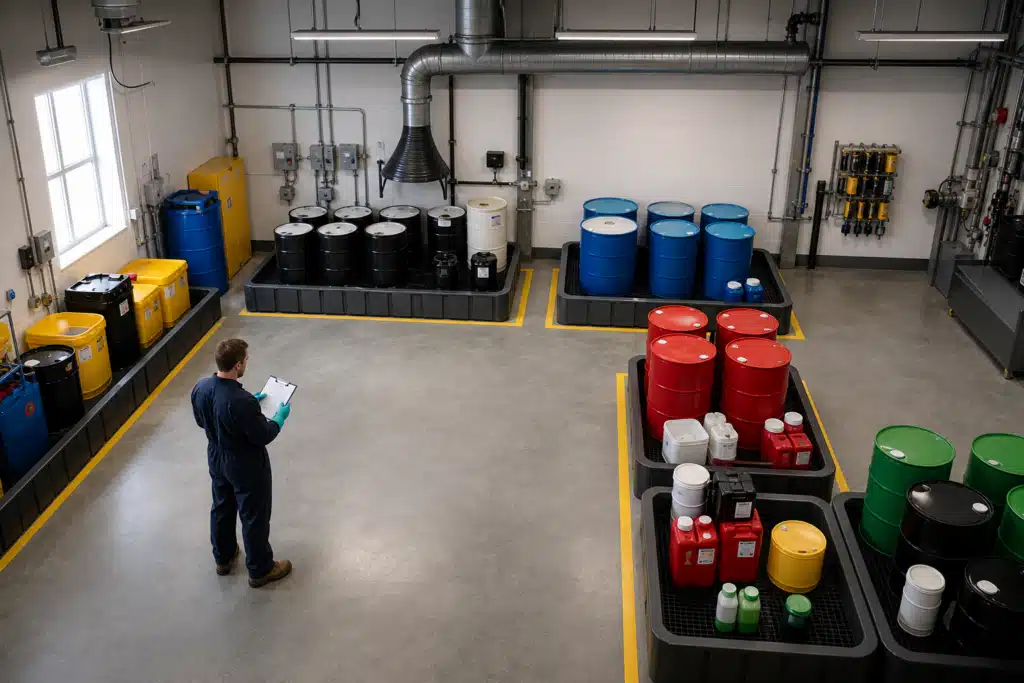
- 2. Proper storage infrastructure: Designate clearly marked accumulation areas with appropriate containment (secondary containment for liquid wastes), fire protection, and spill response equipment.
- 3. Trained personnel: Ensure all employees who handle hazardous waste receive initial and annual refresher training on proper handling, emergency response, and regulatory requirements.
- 4. Written contingency plan: LQGs must maintain a contingency plan that describes emergency procedures, evacuation routes, and coordination with local emergency responders.
- 5. Reliable waste management partners: Work with licensed hazardous waste management companies that can provide proper collection, transportation, and disposal services. Verify their permits, insurance, and compliance history before entering into a contract.
- 6. Regular inspections and audits: Conduct weekly inspections of waste accumulation areas and annual comprehensive audits of your entire waste management program.
Reducing Hazardous Waste Generation
The most effective way to manage hazardous waste is to reduce the amount you generate. Michigan EGLE encourages waste minimization through its Pollution Prevention (P2) program. Strategies include:
- Process modifications: Changing manufacturing processes to use less hazardous materials or generate less waste
- Material substitution: Replacing hazardous chemicals with less toxic alternatives where feasible
- Recycling and reclamation: Recovering and reusing solvents, metals, and other valuable materials from waste streams
- Inventory management: Using first-in, first-out practices and purchasing only the quantities needed to reduce expired or off-spec materials
- Employee training: Teaching workers proper material handling techniques to minimize spills and waste generation
Waste minimization not only reduces disposal costs but can also lower your generator status, simplifying regulatory requirements and reducing liability.
Frequently Asked Questions About Hazardous Waste Management
How do I get an EPA ID number for my Michigan facility?
You can obtain an EPA ID number by submitting EPA Form 8700-12 (Site Identification Form) through Michigan EGLE. SQGs and LQGs are required to have an EPA ID before shipping any hazardous waste off-site. The process typically takes two to four weeks.
What are the penalties for hazardous waste violations in Michigan?
Federal penalties under RCRA can reach $70,117 per day per violation for civil cases. Criminal violations can result in fines up to $50,000 per day and imprisonment. Michigan EGLE can also pursue state-level enforcement actions. Even minor violations like missing labels or late training can trigger significant fines during inspections.
Can I dispose of hazardous waste in my regular trash?
No. Disposing of hazardous waste in regular municipal waste is illegal and can result in criminal charges. Even VSQGs must ensure their hazardous waste reaches a licensed TSDF or is otherwise properly managed. The only exception is "empty" containers that meet the RCRA empty container standard.
How often does EGLE inspect hazardous waste generators in Michigan?
LQGs are typically inspected every two to three years. SQGs may be inspected less frequently, but complaint-driven inspections can occur at any time. VSQGs are inspected less often but are still subject to oversight, especially if complaints are filed or violations are suspected.
What should I do if there is a hazardous waste spill at my facility?
Immediately activate your facility's spill response plan and ensure worker safety. If the release could reach surface water, groundwater, or leave your property, report it immediately to Michigan PEAS at 800-292-4706 and the National Response Center at 800-424-8802. Contact a professional emergency spill response team to assist with containment and cleanup.
Professional Hazardous Waste Management in Michigan
Managing hazardous waste requires expertise, proper equipment, and a thorough understanding of both federal and Michigan regulations. For many industrial facilities, partnering with a professional waste management company is the most efficient and reliable approach to maintaining compliance.
PROS Services has provided hazardous waste management services to Michigan industrial facilities since 1954. Our licensed teams handle waste characterization, collection, transportation, and disposal, giving you confidence that your waste is managed properly from start to finish.
Contact PROS Services to discuss your facility's hazardous waste management needs and schedule a compliance review.
Recent Comments