


29 SepUsed Oil and Coolant Disposal for Michigan Plants and Shops
Every plant, fleet garage and machine shop in Michigan produces used oil and spent coolant. Hydraulic oil gets changed out, compressors get drained, CNC sumps get cleaned, and trucks come in for service. The liquids pile up in drums and totes until someone decides what to do with them. Handled well, used oil and coolant are routine, recyclable waste streams. Handled badly, they turn into contaminated loads, rejected shipments and compliance problems.
This guide covers what counts as used oil and coolant waste, the rules that apply, how to store both streams on site, and how to choose a disposal partner. PROS Services has handled liquid waste disposal for Michigan facilities since 1954, including used oil, waste glycol and industrial wastewater.
What Counts as Used Oil
Under federal rules, used oil is any oil refined from crude or made synthetically that has been used and picked up contaminants along the way. For most facilities that includes:
- Engine, transmission and gear oil from vehicles and equipment
- Hydraulic fluid
- Compressor and turbine oil
- Metalworking and cutting oils
- Heat transfer oil
Used oil is regulated under EPA's used oil management standards (40 CFR Part 279). Those standards assume used oil will be recycled, which is why it is managed differently from hazardous waste as long as it stays clean of other materials.
What Counts as Coolant Waste
Coolant waste usually means spent antifreeze (ethylene or propylene glycol) from engines and equipment, plus water-based machining coolants from CNC and grinding operations. Glycol is not covered by the used oil rules, so it has to be looked at on its own. Spent antifreeze can pick up metals such as lead from the engines it circulates through. If it tests hazardous, it has to be managed as hazardous waste. If it does not, it is typically managed as a non-hazardous liquid industrial by-product.
This is where waste characterization matters. Testing a representative sample tells you exactly what you have, and the disposal facility will want that answer before it accepts the load.
The Rules Michigan Facilities Need to Know
Used oil and coolant sit under a mix of federal and state requirements. The basics every facility manager should know:
- Label it. Containers and tanks holding used oil must be labeled "Used Oil."
- Keep containers sound. Drums, totes and tanks must be in good condition with no leaks, and any spill has to be stopped, contained and cleaned up.
- Do not mix streams. Used oil that is mixed with hazardous waste can become hazardous waste itself. Used oil with more than 1,000 parts per million of total halogens is presumed to have been mixed with hazardous solvents unless you can show otherwise.
- Use a qualified transporter. Used oil must be shipped by a transporter with an EPA identification number. In Michigan, liquid industrial by-products fall under Part 121 of the Natural Resources and Environmental Protection Act, which also requires proper transporters and shipping documents.
- Keep your paperwork. Hold on to your shipping records and characterization reports. They are the first thing an inspector will ask to see.
For the wider picture on every liquid stream a plant produces, see our guide to liquid waste disposal for Michigan manufacturers. Rules change and details vary by facility, so confirm your specific obligations with Michigan EGLE or your environmental compliance lead.
How to Store Used Oil and Coolant on Site
Good storage keeps loads clean, which keeps disposal simple. A few practices make the biggest difference:
- Separate containers for each stream. Keep used oil, glycol and machining coolant in their own clearly labeled drums or totes.
- Keep solvents and parts washer fluid out. One can of brake cleaner or degreaser poured into an oil drum can change how the whole drum is classified.
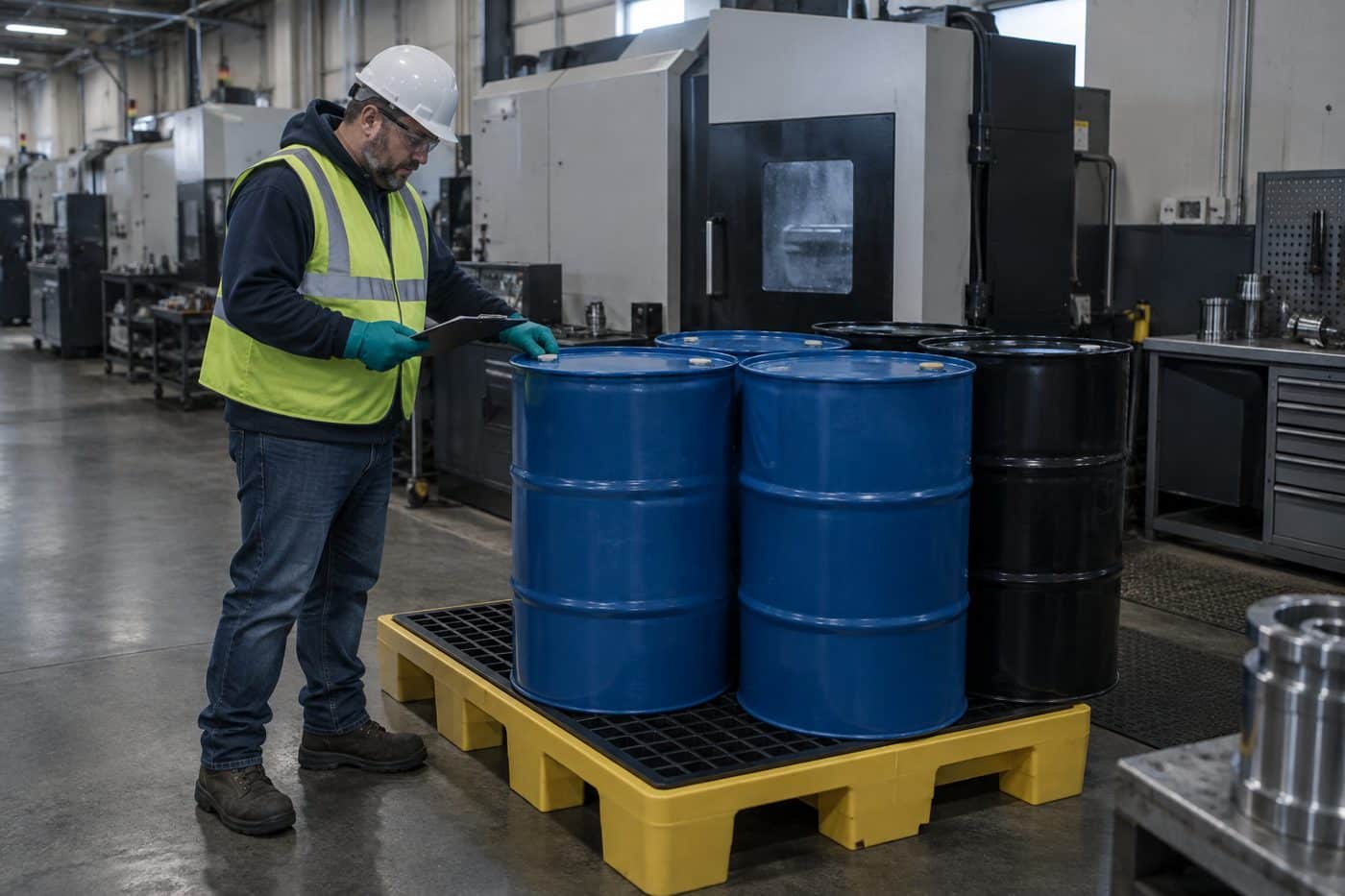
- Use secondary containment. Spill pallets or containment berms under drums and totes catch leaks before they reach floor drains.
- Keep lids closed and bungs tight. Closed containers keep out rainwater, dirt and anything else that should not be there.
- Never pour it down a drain or onto the ground. That includes floor drains, storm drains and gravel lots.
If your site has more drums than it can manage, PROS also handles drum disposal, including pickup and transport of drummed liquids.
How Pickup and Disposal Works
For most facilities the process looks like this:
- Characterization. Samples are tested where needed so every stream has a documented profile.
- Disposal planning. Based on the results, the right recycling or disposal facility is selected with local and federal regulations in mind.
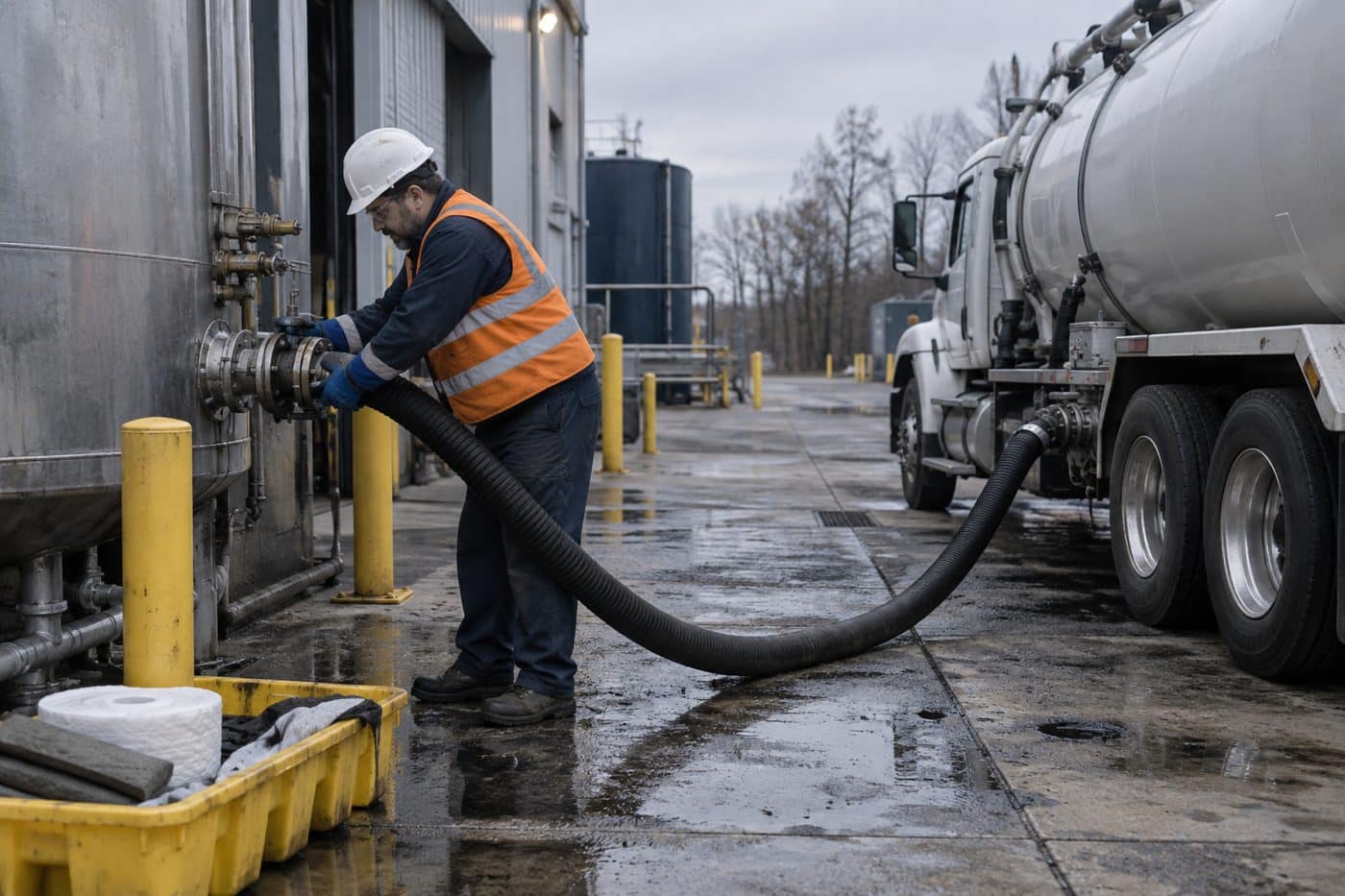
- Vacuum and transport. Crews vacuum the oil, glycol or wastewater from tanks, sumps, drums or totes into tankers and haul it to the approved facility.
- Documentation. You receive the shipping documents for your records.
Larger sites with ongoing volumes often put pickups on a schedule so tanks never run full. PROS also offers liquid waste management programs for facilities that want one partner handling every liquid stream.
Choosing a Used Oil and Coolant Disposal Partner
When you compare providers, ask:
- Do they characterize waste, or just pick it up?
- Can they handle both non-hazardous and hazardous streams if a test comes back hot?
- Do they run their own vacuum trucks and tankers?
- Will they provide complete shipping documentation for your files?
- Can they respond around the clock if a tank or drum fails?
If a container does fail, PROS provides 24/7 emergency spill response, and the 24/7 line is answered by a PROS employee.
Frequently Asked Questions
Can used oil and antifreeze go in the same drum?
No. They are separate waste streams under different rules. Mixing them makes recycling harder and can change how the load has to be managed.
Is used oil a hazardous waste?
Not usually. Used oil that is recycled is managed under the used oil standards rather than as hazardous waste. It becomes a problem when it is mixed with hazardous waste such as chlorinated solvents.
Is spent antifreeze hazardous?
It depends on what it picked up in service. Testing tells you whether it has to be managed as hazardous waste or as a non-hazardous liquid.
What other liquids can be picked up at the same time?
Industrial wastewater, sludges and other liquid by-products can often be scheduled together. See 5 examples of liquid waste for common streams.
Schedule a Used Oil or Coolant Pickup
PROS Services handles used oil and coolant disposal for plants, fleets and shops across Michigan. Call 810.982.7271 or contact us to schedule a pickup or set up a recurring service.
Recent Comments