


25 JunCatch Basin Cleaning: Why Michigan Property Owners Cannot Afford to Skip It
Every time it rains in Southeast Michigan, stormwater flows across parking lots, streets, and landscaped areas before draining into catch basins. These underground structures are the first line of defense against flooding, water damage, and environmental contamination. But when catch basins are neglected, they become the source of problems instead of the solution.
PROS Services has been maintaining stormwater infrastructure across the Detroit metro area and throughout Michigan since 1954. In this guide, we explain how catch basin cleaning works, why it is critical for property owners and facility managers, and how to develop a maintenance schedule that protects your property and keeps you compliant with local regulations.
What Is a Catch Basin and How Does It Work?
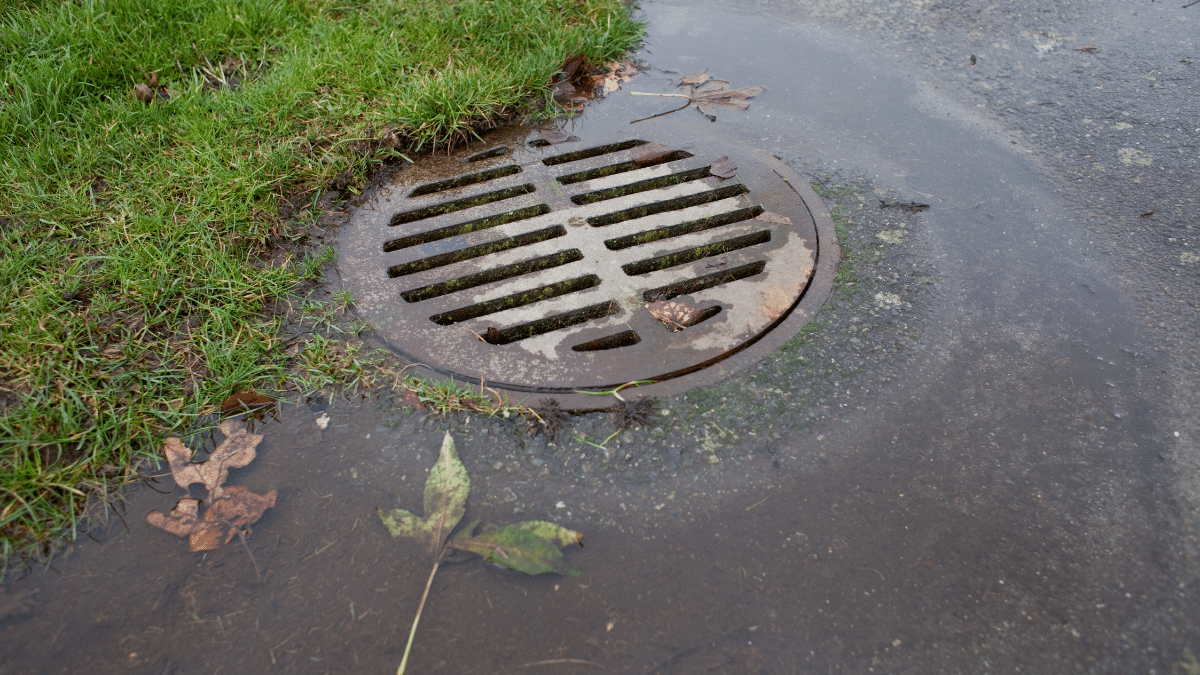
A catch basin is a drainage structure installed at low points in paved or landscaped areas to collect surface water and direct it into the underground storm drain system. You have probably seen them at the edges of parking lots, along curbs, and in residential yards. They typically feature a grated or slotted opening at the surface and a basin below that traps sediment and debris before water continues through the connected pipes.
The basic components of a catch basin include:
- Surface grate or inlet: The visible opening that allows stormwater to enter while keeping larger debris out
- Basin or sump: The below-ground chamber where sediment, sand, leaves, and small debris settle to the bottom
- Outlet pipe: The pipe that carries filtered stormwater from the basin to the larger storm drain network
- Trap or hood (in some models): A baffle or hood that prevents floating debris and hydrocarbons from passing through to the outlet pipe
Over time, the sump fills with accumulated debris. If the basin is not cleaned regularly, sediment blocks the outlet pipe, water backs up, and flooding occurs on the surface.
Why Catch Basin Cleaning Is Essential
Preventing Flooding and Property Damage
A clogged catch basin cannot drain stormwater effectively. During heavy rain events, which are increasingly common in Michigan's spring and summer months, backed-up basins lead to standing water in parking lots, flooded basements, and erosion around building foundations. For commercial and industrial properties, this can mean damaged inventory, disrupted operations, and costly repairs.
Michigan receives an average of 34 inches of rain per year, with the heaviest periods occurring between April and September. Spring snowmelt adds additional volume to stormwater systems that are already under stress from winter debris accumulation. Properties that skip catch basin cleaning during this critical window face the highest risk of flooding.
Environmental Compliance and Regulations
Under the Clean Water Act and Michigan's stormwater management regulations enforced by the Michigan Department of Environment, Great Lakes, and Energy (EGLE), property owners are responsible for maintaining stormwater infrastructure on their property. Municipal Separate Storm Sewer System (MS4) permits require regular inspection and maintenance of catch basins and storm drains.
Neglected catch basins can allow pollutants, including oil, chemical runoff, heavy metals, and sediment, to bypass the sump and flow directly into rivers, lakes, and wetlands. For facilities in the Detroit metro area, this means potential contamination of the Great Lakes watershed. Violations can result in fines, required remediation, and negative impacts on operating permits.
Extending Infrastructure Lifespan
Sediment buildup creates pressure on basin walls and connected pipes. When debris accumulates to the point where water cannot flow freely, the resulting hydrostatic pressure can crack basin walls, separate pipe joints, and cause sinkholes in the surrounding pavement. Regular cleaning prevents these structural failures, which are far more expensive to repair than the cost of routine maintenance.
Signs Your Catch Basin Needs Cleaning
Property managers and facility operators should watch for these indicators that a catch basin requires immediate attention:
- Standing water around the grate: Water pooling on the surface near the catch basin after rain stops is the clearest sign of a blockage
- Visible debris in the grate: Leaves, trash, and sediment accumulating on and around the grate opening
- Foul odors: Decomposing organic material in a neglected basin produces noticeable smells, particularly in warm weather
- Slow drainage: Water that takes significantly longer to drain compared to previous rain events
- Sinkholes or pavement settling: Depressions in the pavement around the catch basin may indicate structural damage caused by sediment pressure or undermining
- Overflow during moderate rain: If the basin overflows during normal rainfall (not just extreme events), the sump is likely full
As a general rule, if the sediment level in the sump reaches one-third of the basin's total depth, it is time for cleaning.
How Professional Catch Basin Cleaning Works
Professional catch basin cleaning is performed using specialized equipment that most property owners and general contractors do not have access to. Here is what the process typically involves when performed by a team like PROS Services:
Step 1: Inspection
Technicians begin by inspecting the catch basin to assess the condition of the grate, the sediment level in the sump, the structural integrity of the basin walls, and the condition of the outlet pipe. This inspection determines whether cleaning alone is sufficient or whether repairs are needed.
Step 2: Debris Removal
Using industrial vacuum trucks, technicians extract the accumulated sediment, sand, gravel, leaves, and other debris from the sump. Vacuum trucks generate powerful suction that removes both solid debris and standing water from the basin. For heavily compacted material, hydro jetting may be used to break up the sediment before vacuuming.
Step 3: Pipe Flushing
After the basin is cleared, technicians flush the outlet pipe to ensure it is free of obstructions. Sewer jetting equipment pushes high-pressure water through the pipe to remove grease, mineral buildup, and debris that may have entered the connected storm drain network.
Step 4: Final Inspection and Documentation
The technician performs a final inspection to confirm the basin is clean, the grate is secure, and the outlet pipe is flowing freely. Documentation of the cleaning, including photographs and condition notes, is provided for the property owner's records. This documentation is important for demonstrating compliance during municipal inspections.
Step 5: Waste Disposal
The material removed from catch basins is classified and disposed of according to Michigan regulations. Depending on the location and surrounding land use, catch basin sediment may contain petroleum products, heavy metals, or other contaminants that require special handling. PROS Services manages the full chain of custody for waste disposal, ensuring proper documentation and compliance.
How Often Should Catch Basins Be Cleaned?
The appropriate cleaning frequency depends on several factors:
- Property type: Commercial and industrial properties with high traffic volumes and paved surfaces generate more runoff and debris than residential properties. Most commercial properties benefit from cleaning at least twice per year.
- Surrounding environment: Properties near mature trees, construction sites, or unpaved areas accumulate debris faster and may need quarterly cleaning.
- Local regulations: Many Michigan municipalities require catch basin inspection and cleaning at specific intervals as part of stormwater management permits.
- Seasonal factors: Spring and fall are the most critical times for catch basin cleaning in Michigan. Spring cleaning removes winter sand, salt, and debris before the heavy rain season. Fall cleaning clears leaf accumulation before freeze cycles begin.
For most Michigan properties, a minimum of two cleanings per year (spring and fall) provides adequate protection. High-traffic or high-debris locations may require quarterly or even monthly service.
Catch Basin Cleaning for Different Property Types
Commercial and Retail Properties
Parking lots are the primary concern for commercial properties. The combination of vehicle traffic, landscaping debris, and customer litter creates a constant flow of material into catch basins. Regular cleaning prevents the flooding that can close parking areas and create liability for slip-and-fall incidents.
Industrial Facilities
Industrial properties face additional challenges because stormwater may carry chemical residue, petroleum products, and process waste into catch basins. These properties often fall under stricter regulatory requirements, including Stormwater Pollution Prevention Plans (SWPPPs) that mandate specific maintenance schedules and documentation.
Residential Catch Basins
Homeowners with catch basins on their property are responsible for keeping them functional. While residential catch basins are typically smaller, they still require periodic cleaning to prevent yard flooding and foundation damage. Neighborhoods with mature trees or proximity to construction should plan for more frequent maintenance.
Municipal and Public Infrastructure
Municipalities across Michigan maintain thousands of catch basins along public roads and in parks. PROS Services works with municipal clients to provide systematic cleaning programs that cover large numbers of basins efficiently, using vacuum trucks that can service dozens of basins per day.
The Cost of Neglecting Catch Basin Maintenance
Skipping catch basin cleaning to save money is a false economy. The costs of neglect are significantly higher than the cost of regular maintenance:
- Flood damage repairs: Water damage to buildings, inventory, and equipment can cost tens of thousands of dollars per incident
- Pavement repair: Sinkholes and pavement failures caused by undermined catch basins require excavation and repaving
- Regulatory fines: EGLE and local municipalities can issue fines for failure to maintain stormwater infrastructure
- Environmental remediation: If pollutants from a neglected basin contaminate a waterway, the property owner may be held responsible for cleanup costs
- Liability claims: Flooding caused by unmaintained basins can result in claims from neighboring property owners or injured visitors
Proactive catch basin cleaning typically costs a fraction of what a single flood event or regulatory enforcement action would cost.
Frequently Asked Questions
What is the difference between a catch basin and a storm drain?
A catch basin is a specific type of storm drain structure that includes a sump (a below-ground sediment trap) designed to capture debris before water enters the storm sewer network. A storm drain refers to the broader system of pipes, channels, and outlets that carry stormwater away from developed areas. Catch basins are entry points into the storm drain system.
Can I clean a catch basin myself?
Surface debris around the grate can be cleared by hand. However, removing accumulated sediment from the sump requires industrial vacuum equipment. Professional cleaning also includes pipe flushing and structural inspection that ensure the entire system is functioning properly. For commercial and industrial properties, professional service is the standard.
What happens to the material removed from a catch basin?
Catch basin sediment is transported to licensed disposal facilities. Depending on the composition of the material, it may be disposed of as non-hazardous solid waste or, if contaminated with petroleum or chemicals, handled as regulated waste with full documentation.
Is catch basin cleaning required by law in Michigan?
Many Michigan municipalities require catch basin maintenance as part of stormwater management ordinances and MS4 permits. Commercial and industrial property owners with SWPPPs are typically required to document regular catch basin inspection and cleaning. Check with your local municipality for specific requirements in your area.
Schedule Catch Basin Cleaning with PROS Services
Do not wait for the next heavy rain to discover that your catch basins are clogged. PROS Services provides professional catch basin cleaning services for commercial, industrial, residential, and municipal properties throughout Michigan. Our vacuum truck fleet and experienced technicians can handle everything from a single residential basin to a facility-wide stormwater maintenance program.
Contact PROS Services today to schedule catch basin cleaning for your property, or call us at (810) 982-7271 to discuss a maintenance plan that keeps your stormwater system working when you need it most.
Recent Comments